Solesca for OEMs
Show your equipment on a site, not on a spec sheet.
Four steps from a datasheet to a modeled site your customer’s engineer can open.
Trusted by leaders in solar development










From spec sheet to modeled site
The buyer decides on one piece of ground. Show them your product on it.
- 1 of 4
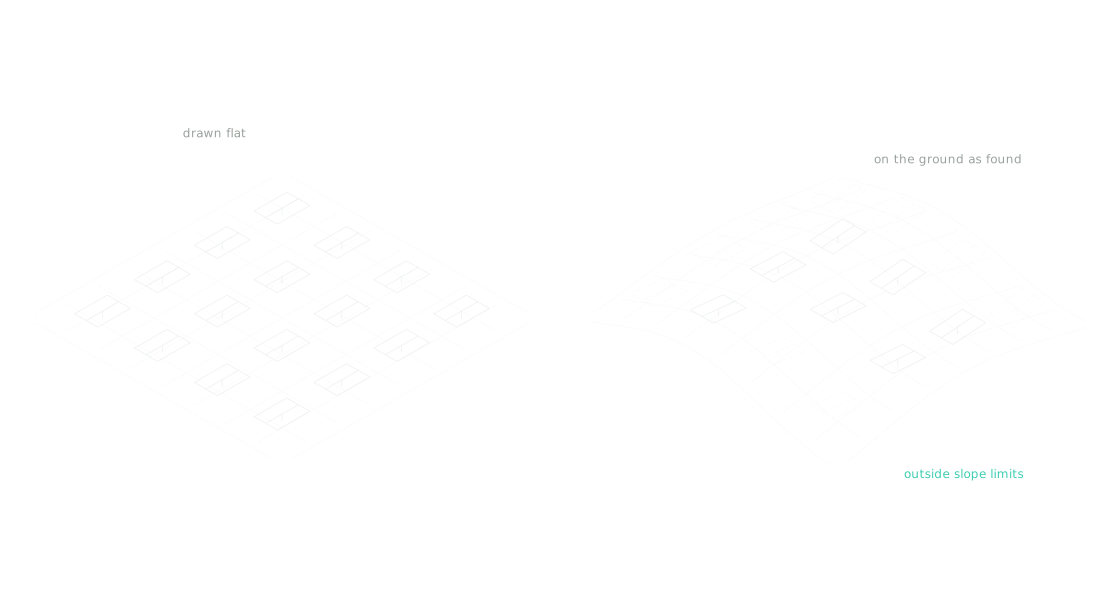
Place
Your racking product, single-axis tracker or fixed tilt, laid on bare-earth elevation within its own slope limits.
Pile reveals, frame clearance and pile count reported. No grading.
- 2 of 4
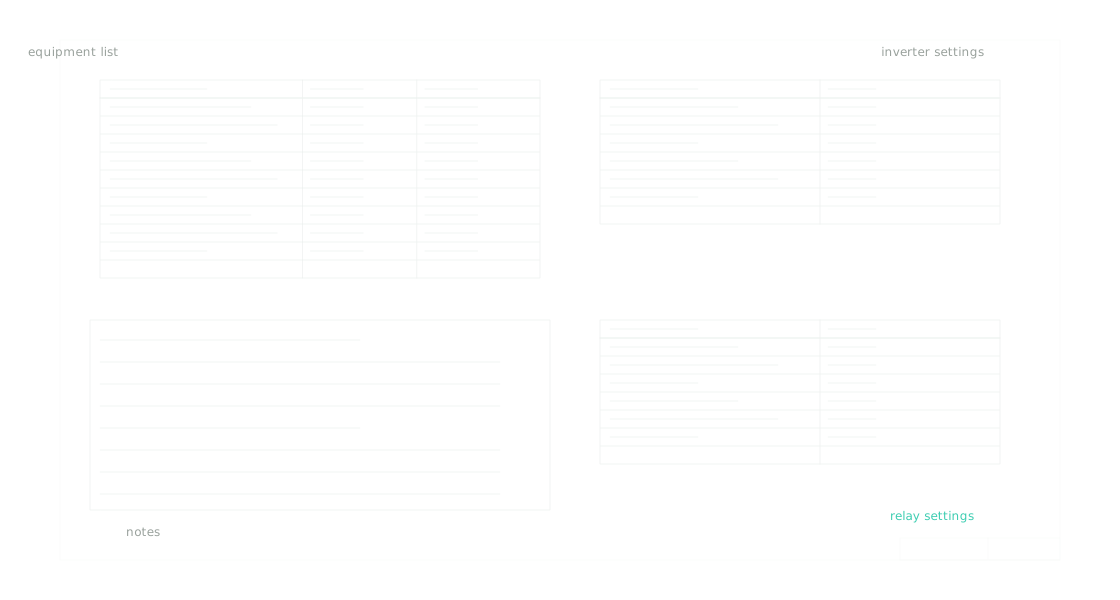
Configure
Position inverters and AC equipment, then set inverter and relay settings on the equipment page.
- 3 of 4
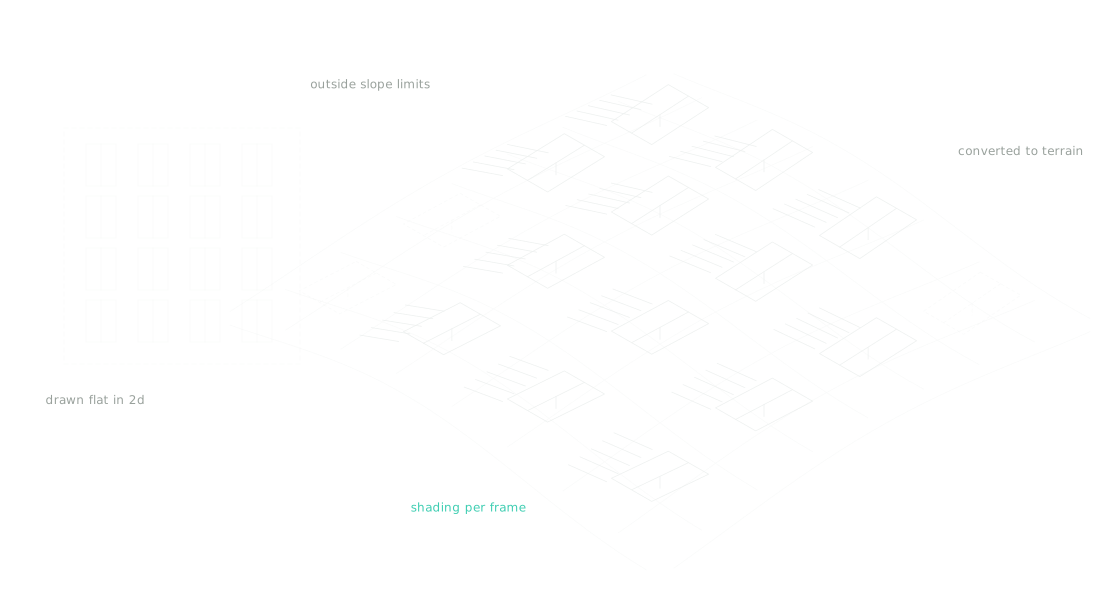
Simulate
Yield with the product as placed, each frame at its own tilt and azimuth, validated within 1% of PVsyst.
- 4 of 4
Share
Export for the customer’s engineer, or embed the whole flow in your own product through the API.
- PVsyst
- CAD
- 8760
- API
- PVsyst
- CAD
- 8760
- API
Embedding
Embedded before, in public
Energy Toolbase embedded Solesca in ETB Developer. The direction runs both ways: DNV SolarFarmer runs inside Solesca through DNV’s API Partner Program.
- API access on every Design License seat, at no extra cost
- Covered by Solar Power World in November 2024 and Solar Builder in January 2025
Questions manufacturers ask
Does Solesca have an OEM or manufacturer partner program?
No formal program exists today: no tier, no badge and no co-marketing package. What exists is an open API on the Design License, a public record of being embedded in a third-party product, and a simulation engine with outside validation behind it. If you need a formal program, the useful conversation is a direct one.
Is the API an extra cost?
No. API access is included on the Design License.
Can racking products be modeled against terrain?
Yes. Single-axis trackers and fixed-tilt tables are placed on the existing terrain within the along- and across-slope tolerances you set, and the layout reports pile reveals, frame clearance and pile count. Solesca does not model grading or cut and fill, and does not give embedment depth.
Can a customer verify a design made with our equipment?
Yes. Designs export to PVsyst, CAD and 8760, so the customer’s engineer re-runs the case in their own software. Solesca holds an NREL cooperative research agreement, CRADA CRD-23-23746, and DNV SolarFarmer runs inside Solesca.
Tell us what you need from a design tool
An embedded design flow, a modeled reference project, or confidence that the simulation treats your product fairly. Say which, and we will tell you straight whether Solesca does it today.